
If you’re planning a trip to Europe, you’ve probably been hearing about something called the EES — the Entry/Exit System. If social media has you imagining airport chaos and endless lines, don’t panic! Here’s a simple breakdown of what it is, what it isn’t, and exactly what you need to do before your trip.
What Is EES?
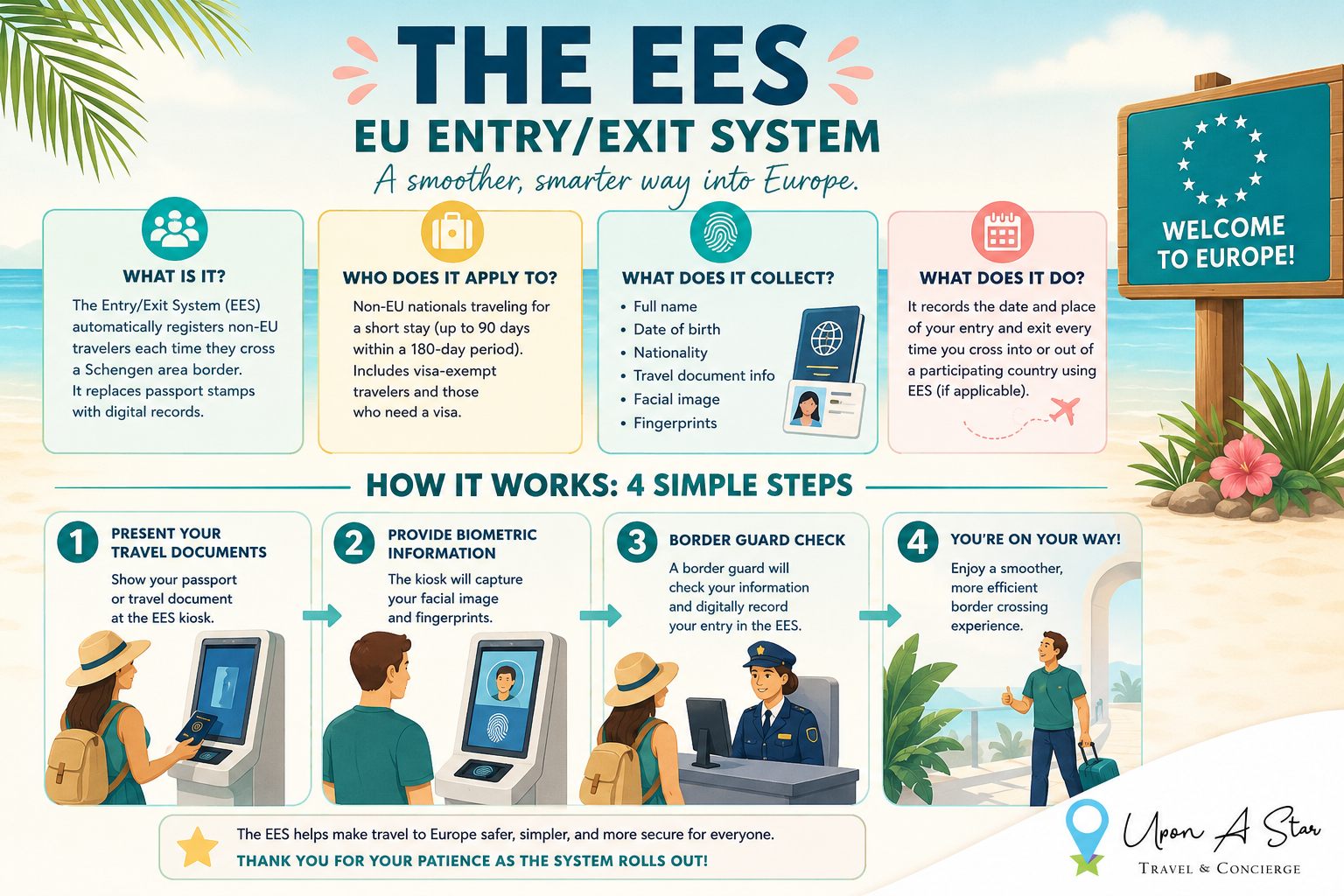
The European Union’s new Entry/Exit System (EES) is a digital border control system for travelers entering many European countries in the Schengen Area. Instead of stamping passports by hand, border officials will now electronically record your entry and exit using biometric data like fingerprints and a facial scan collected via a kiosk in the airport when you arrive.
The system applies to most non-EU travelers visiting Europe for short stays including travelers from the United States and Canada.
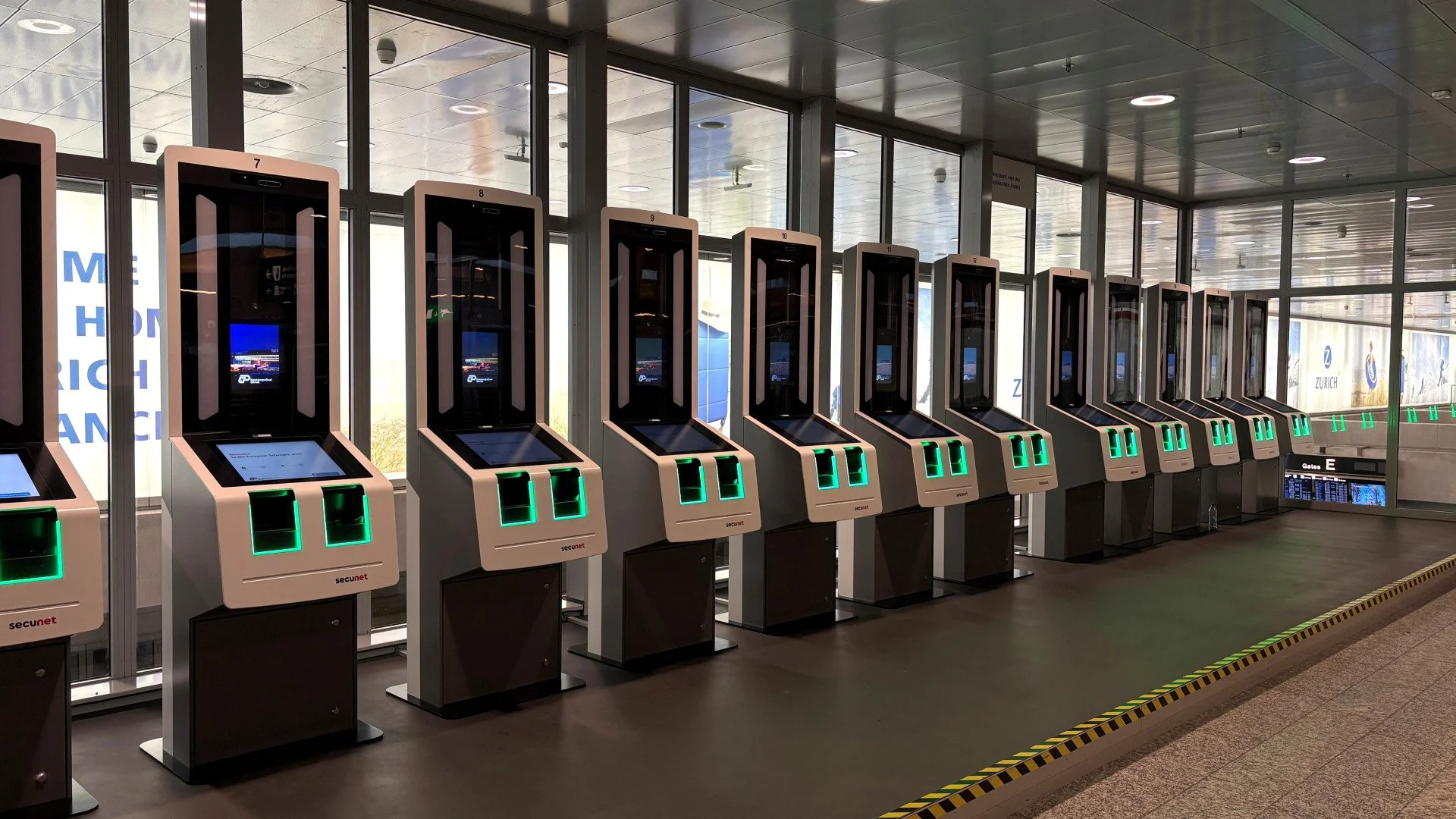
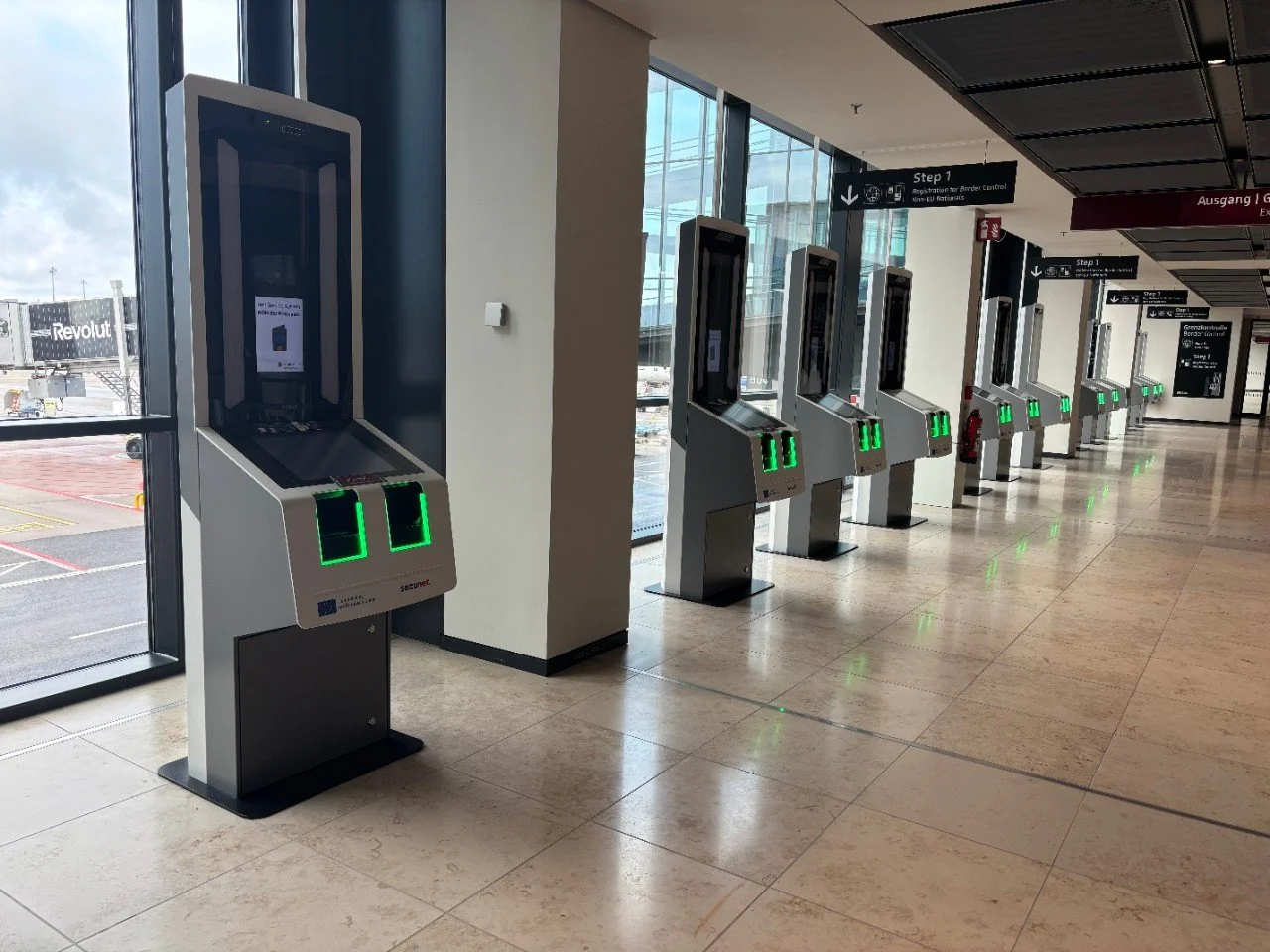
At many airports, you’ll use a self-service kiosk before speaking with a border officer.
And yes, that does mean that you may not get those beloved passport stamps in your book.
Wait, What Does Schengen Mean?
The Schengen Zone is a group of European countries that have eliminated passport checks between their shared borders meaning you can move freely between these countries similar to the way we can travel between states in the US. Once you enter the Schengen Area, you can generally move freely between member countries without additional passport control. Popular destinations in the Schengen Zone include France, Italy, Spain, Greece, Germany, and the Netherlands. (This does not include the UK; it also doesn’t include Ireland even though they’re part of the EU.)
Why EES?
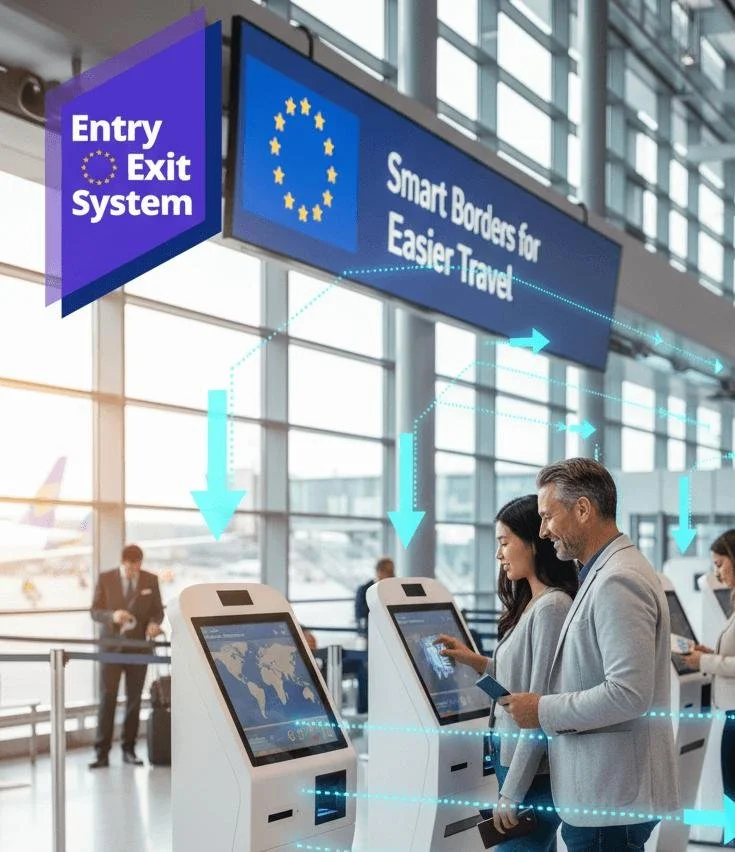
Stop at these kiosks and simply follow the directions.
So why is Europe adding the EES? The goal is to make travel safer for everyone by:
Improving border security
Tracking overstays electronically
Speeding up border processing over time
Replacing traditional passport stamps
What EES Isn’t
One of the biggest misconceptions is that EES is a visa. It is not a visa! It’s NOT:
A visa
A new travel authorization
Something you pay for
An online form you must complete before departure
A form you fill out on the plane
Many travelers confuse EES with ETIAS which is a separate upcoming travel authorization system that has not fully launched yet. We’re not even talking about ETIAS yet. Just throw it out of your vocabulary for now!
EES is simply the border registration process you complete when entering Europe. Once the kinks are worked out, dozens of these machines can do the work of the immigration officers in less time moving you quickly through the airport.
It also doesn’t mean Europe is suddenly “hard to visit.” For most travelers, it will simply add a few extra minutes at passport control — especially the first time you use it.
What Do I Do in Advance?
The good news? Not much. Before your trip:
Make sure your passport is valid for at least 6 months beyond your travel dates
Double-check that your passport is biometric/e-passport capable (How do you know? If you've applied for a new passport since 2010, it will be biometric. The best way to check if you're unsure, though, is to look at the front cover of your passport. If there's a small symbol which looks like a camera near the bottom, then you have a biometric passport.)
Allow extra time at the airport during your first EES experience. Meaning don’t book a 60 minute layover at the busiest airports in Europe and allow plenty of time to catch a connection, a train, or even a scheduled ground transfer.
Stay patient and flexible during the rollout period
There is no separate EES application you need to complete in advance. Because the system is still relatively new, some airports are experiencing longer queues while travelers and staff adjust to the process.
What Do I Do at the Airport?
When you arrive in Europe, you may see dedicated EES kiosks before passport control.
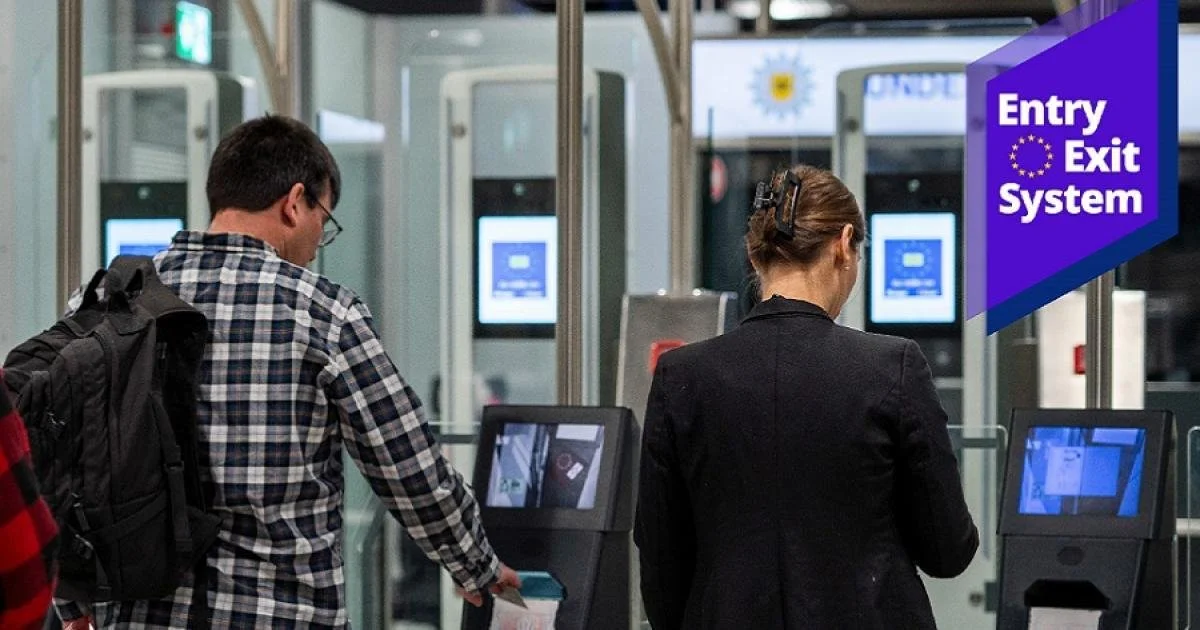
The process usually looks something like this:
Scan your passport
Have your photo taken
Scan your fingerprints
Proceed to an e-gate or border officer
After your first registration, future entries should be faster because your information is already stored in the system.
Some travelers have reported fingerprint scanners taking multiple tries, so don’t be surprised if the process feels a little awkward at first. Mine wouldn’t take in Madrid, but no biggie—I saw an immigration officer and was out in no time!
And yes — during busy travel periods, queues can be longer than usual right now.
What Do I Need for EES?
For most travelers, you’ll simply need:
A valid passport
Your face (for a photo) and your fingers (for fingerprints)
Patience for possible lines during the transition period!
You do not need:
Printed forms
Passport photos
Any sort of application
A visa (unless your nationality normally requires one)
Final Thoughts
The new EES system may feel intimidating at first, but in reality, it’s simply Europe modernizing border control. Think of it like the automated passport kiosks already being used for Global Entry on return to the US or the e-gates being used in Cancun and Curacao.
These first few months are going to include some longer wait times as everyone is learning the system, but eventually the process should become smoother and faster for travelers.
Travel Agent Pro Tip: Don’t sweat it! There’s nothing you can do to expedite the process. There’s nothing to do to prepare for it. Just follow the signs, ask an airport employee if you’re not sure what line you need. No need to worry and fret!
If you have upcoming Europe travel plans and aren’t sure how EES may affect your itinerary, ask your Upon a Star Travel Advisor! Ready to book a trip? So are we! Let’s talk about your next adventure whether it requires a passport or not.