
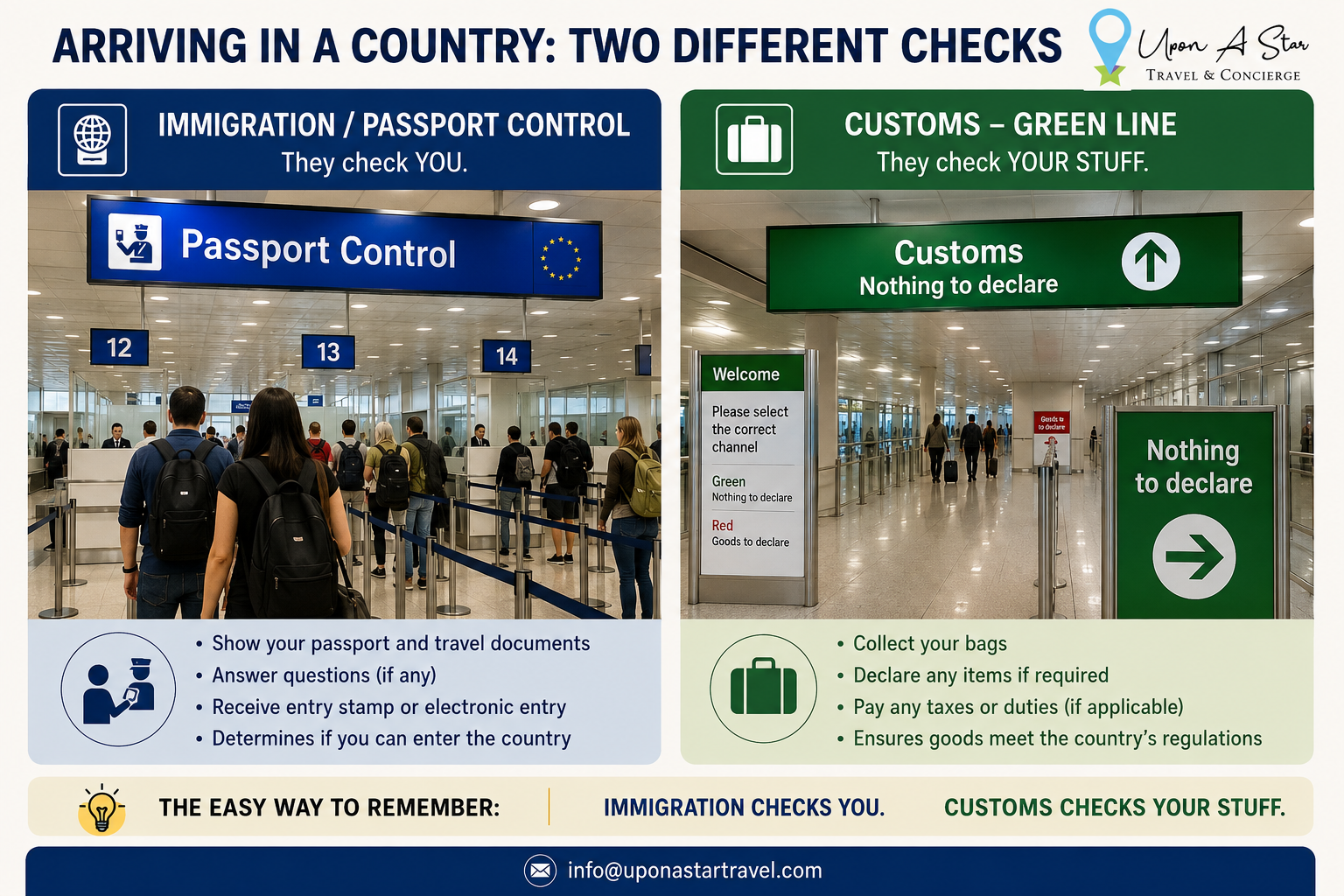
If you’ve traveled internationally or been on any travel chat page, you’ve probably heard someone say, “We have to go through customs.”
But do you?
Maybe. Or maybe what you actually need to go through is immigration—or passport control.
Just like adapter and converter, these are travel terms we tend to use interchangeably, but they actually mean very different things. So, let’s clear it up!
Passport Control / Immigration = YOU
Immigration is about people entering or leaving a country.
First, immigration IS passport control. These you can safely use interchangeably!
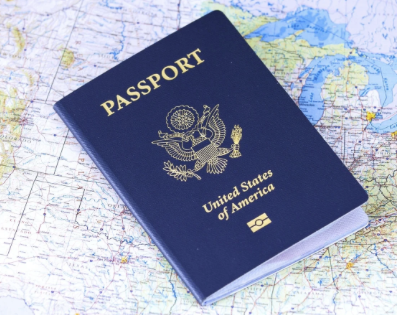
This is where your passport comes into play. An immigration or border control officer—or, increasingly, an automated passport gate (like the EES in place in Europe or the ETA in the United Kingdom)—checks your passport and determines whether you are permitted to enter the country.
Depending on where you’re traveling, the signs may say Immigration, Passport Control, or Border Control. For the average traveler, these terms generally refer to the same basic process: the country is checking YOU.
You may be asked how long you’re staying, where you’re staying, or the purpose of your trip. Your passport may be stamped although many countries have moved toward electronic entry records instead. Either way, there is immediately a record of you entering the country.
When do you go through immigration?
Typically, you go through immigration when you enter a country or immigration zone from another one.
For example, if you fly from the United States to Paris, you’ll go through passport control when you arrive in France because you’re entering a new country. Most of continental Europe is considered part of the Schengen Area.
If you then fly from Paris to Rome, you normally won’t go through passport control again because both France and Italy are within the Schengen Area. This is almost like a US domestic flight.
But fly from Paris to London? You’ll encounter passport control again because the United Kingdom is not part of the Schengen Area.
And yes—you may sometimes encounter passport control when leaving a country or immigration zone, too. Procedures vary depending on where you’re traveling.
The easy way to remember it:
Immigration / Passport Control = YOU and your permission to cross the border.
Customs = YOUR STUFF
Customs, on the other hand, is about what you’re bringing into a country.
Customs officials are concerned with goods: food, alcohol (lovely wine or whiskey you’re bringing back), tobacco, large amounts of cash, expensive purchases (like those fancy purses from France or Italy), agricultural products, and other items that may be restricted, prohibited, or subject to taxes or duties.
This is why customs usually comes after baggage claim when you arrive at your final entry point. You collect your luggage, and then proceed through customs with the items you’re bringing into the country.
In many airports, this may be as simple as walking through a “Nothing to Declare” or green channel. You might not speak to anyone at all.
That doesn’t mean you skipped customs.
Walking through the customs exit IS going through customs.
If you have something that needs to be declared, you’ll follow the appropriate signs and declare those items to customs officials.
The easy way to remember this one:
Customs = YOUR STUFF and what you’re bringing across the border.
So Which Comes First?
When arriving on an international flight, the typical order is:
Passport Control / Immigration → Baggage Claim → Customs
First, the country decides whether or not you can enter.
Then you collect your checked bags.
Finally, customs deals with the things you’re bringing with you into the country.
There are exceptions, of course. Individual airports, countries, having connecting flights, and special arrangements such as U.S. Preclearance can change exactly where these steps happen.
Why Does It Matter?
Mostly because knowing the difference makes international travel a little less confusing.
If someone tells you there’s a long line at “customs,” they may actually be talking about the line at passport control. And if you’re trying to figure out whether you’ll need to collect your bags during a connection, knowing which border process happens where can make a big difference.
So next time you’re traveling internationally, remember:
Immigration or Passport Control checks YOU.
Customs checks YOUR STUFF.
And there you have it! One more piece of travel terminology officially cleared up. Because the more you know before you go, the easier it is to travel with confidence—and look like you know exactly what you’re doing!
Now you can be that slightly annoying—but completely correct—traveler who knows the difference.
Ready to book your next trip? Contact your favorite Upon a Star Travel advisor or reach out to us to start planing your next adventure!